Focus on fund domiciles: Should it be Luxembourg, Liechtenstein or Switzerland?
Choosing the fund’s domicile is a key decision
An important decision is, in particular, the choice of the fund domicile. This must not only have an excellent reputation, political stability, and a robust infrastructure, but also the necessary expertise and sufficient capacity for the launch and ongoing operation of collective investment schemes. In addition, factors such as flexibility in product design, the quality and availability of local service providers, investor acceptance, and the duration and efficiency of the regulatory approval process are becoming increasingly important. Tax considerations are equally crucial, both at fund and investor level, particularly in connection with double taxation treaties and withholding taxes.
In discussions with banks and asset managers engaged in active distribution, the choice of fund domicile is one of the most critical structuring issues. In our experience, it is always worthwhile analysing this fundamental decision very carefully, as subsequent cross-border redomiciliation involves significant regulatory, operational and time-related costs.
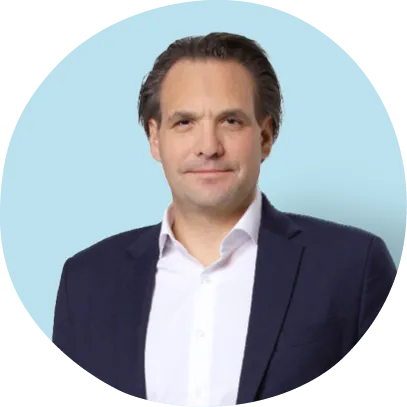
To determine the most suitable domicile for the fund, we recommend a detailed analysis and the early involvement of experts.
Marc Fischer Head Fund Client Solutions & Services VP Fund Solutions (Liechtenstein) Ltd
Luxembourg, Liechtenstein and Switzerland in comparison
Luxembourg is Europe’s leading fund location and ranks second worldwide after the US. The country has a long-standing tradition in the fund sector and is internationally recognised as a reliable and established fund location. The range of available fund structures is correspondingly broad, particularly in the UCITS and AIF segments. For asset managers operating internationally, Luxembourg offers a standardised regulatory framework and a well-developed fund infrastructure. EU passporting enables cross-border distribution within the European single market, and Luxembourg is particularly well-suited to large-volume, internationally oriented fund structures.
Liechtenstein has particularly established itself as an attractive domicile for private label funds and alternative investments. This applies to both funds intended for active distribution and structures for family wealth. For Swiss fund providers, Liechtenstein serves as an efficient gateway to the EU single market as it is part of the European Economic Area. In addition to competitive costs and comparatively short approval times, the location stands out for its in-depth specialised knowledge and bespoke solutions for complex investment strategies.
Swiss funds are primarily used by domestically oriented institutions and Swiss institutional investors. However, since Switzerland is not part of the European Economic Area, active distribution outside Switzerland is significantly restricted. Additionally, the Swiss withholding tax on distributions from a Swiss fund can be a major disadvantage for foreign investors. The majority of Swiss funds originate from the pension sector, often in the form of customised single-investor funds.
Over the past decades, Liechtenstein, Luxembourg and Switzerland have demonstrated that they view regulatory requirements as strategic opportunities and actively promote innovation. Luxembourg, in particular, has developed into one of the world’s leading fund locations thanks to its early implementation of the UCITS Directive and continuous growth. Liechtenstein, in turn, has established itself as a major cross-border hub for private-label funds, offering speed and attractive cost structures, particularly for smaller launch volumes. Switzerland is particularly well-suited to Swiss pension funds and institutions that focus exclusively on the domestic market.
Fund domicile: setting the strategic course for distribution, structure and efficiency
The choice of the appropriate fund domicile depends on numerous factors, as well as how these factors are weighted in the context of the specific structuring and objectives. We therefore recommend a comprehensive analysis and the early involvement of experienced experts.