Flexibility Is Not a One-Way Street
Marcel, when people talk about flexibility these days, many think first of working from home or part-time work. What else does flexibility mean at VP Bank?
For me, flexibility means more than just working from home or whether someone works 80 or 100 per cent. The key is to balance the needs of employees with the requirements of their role, their team and the bank. Not every solution suits every task. At the same time, there are more options than traditional full-time models would suggest, such as the part-time work mentioned earlier, flexible working hours or job-sharing.
But there is another side to flexibility: the world of work – and therefore the demands placed on employees – is constantly changing. Flexibility therefore does not just mean that VP Bank creates different options. It also requires employees to be willing to develop further, learn new things and embrace change. It is about finding solutions together that work for both sides and are sustainable in the long term.
Marcel, you yourself work an 80 per cent role. What is needed to ensure that flexible working models also work in management roles?
My example shows that a responsible management role does not necessarily have to be tied to a full-time position. This requires clear responsibilities, trust and reliable agreements. The key is that performance is up to standard and responsibilities are fulfilled. Physical presence alone is not a suitable yardstick.
Flexible models can also create opportunities for others. If tasks are distributed differently, staff can take on additional responsibility, familiarise themselves with new areas or develop their skills by tackling more challenging tasks. This requires interest and a willingness to do so. The situation is similar with job-sharing: overall responsibility must be clearly defined, but not every task needs to fall to the same person. Flexibility requires good organisation and a willingness on the part of everyone involved to take on responsibility.
Flexible working models do not merely create new forms of collaboration; they can also open up
A career today is no longer just a question of the next title.
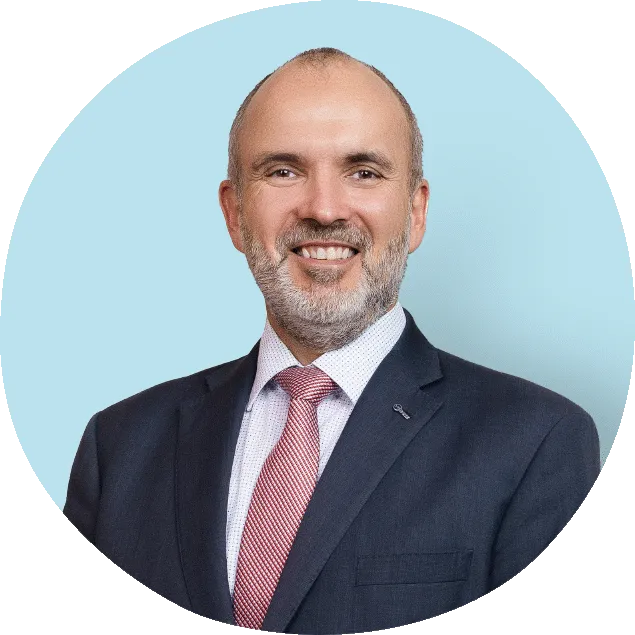
Marcel Tschanz Group Head People & Culture
Philipp, careers today no longer always follow a linear path. What career paths does VP Bank wish to facilitate for its staff?
A career today is no longer just a question of the next title. People have different strengths, interests and goals. That is why we want to facilitate development in various directions: into a leadership role, towards specialist expertise, through new responsibilities or by moving to a different role within the bank. With our transparent career framework, we provide guidance and highlight development opportunities within the bank. Specialist and leadership career paths should offer equivalent development opportunities, and it should also be possible to switch between these paths. At the same time, this broader perspective helps us to identify talent at an early stage and prepare people for future roles or additional responsibilities. VP Bank can create opportunities and provide guidance. However, it is also crucial that employees remain curious, actively seize opportunities and help shape their own path.
Philipp, AI is already changing the way we work. Which skills are becoming more important as a result, and are new opportunities also emerging for people with unconventional career paths?
The crucial question is not whether AI will replace people, but how people and AI will work together in the future. AI is already changing tasks and ways of working. The more routine tasks are automated, the more important judgement, critical thinking and the ability to contextualise results become. Professional expertise remains the ticket to entry in many fields, but cultural fit, learning agility and the ability to use AI productively and responsibly are increasingly making the difference. In recruitment, we therefore focus more on the potential a candidate brings, how well their skills can be transferred to new tasks, and how well they fit into our culture.
This also opens up opportunities for people with less traditional career paths. At the same time, technical and regulatory requirements remain crucial, particularly in banking. Ultimately, it is not AI that will make the difference, but how people use it.

Ultimately, it is not AI that will make the difference, but how people use it.
Philipp Hammer Group Head Talent Acquisition & Employer Branding